- In stock Hurry, only a few left! Backorder Backorder
CIARE SPL
CXI160 6.5" COAXIAL 4 Ohm LF / 8 Ohm HF
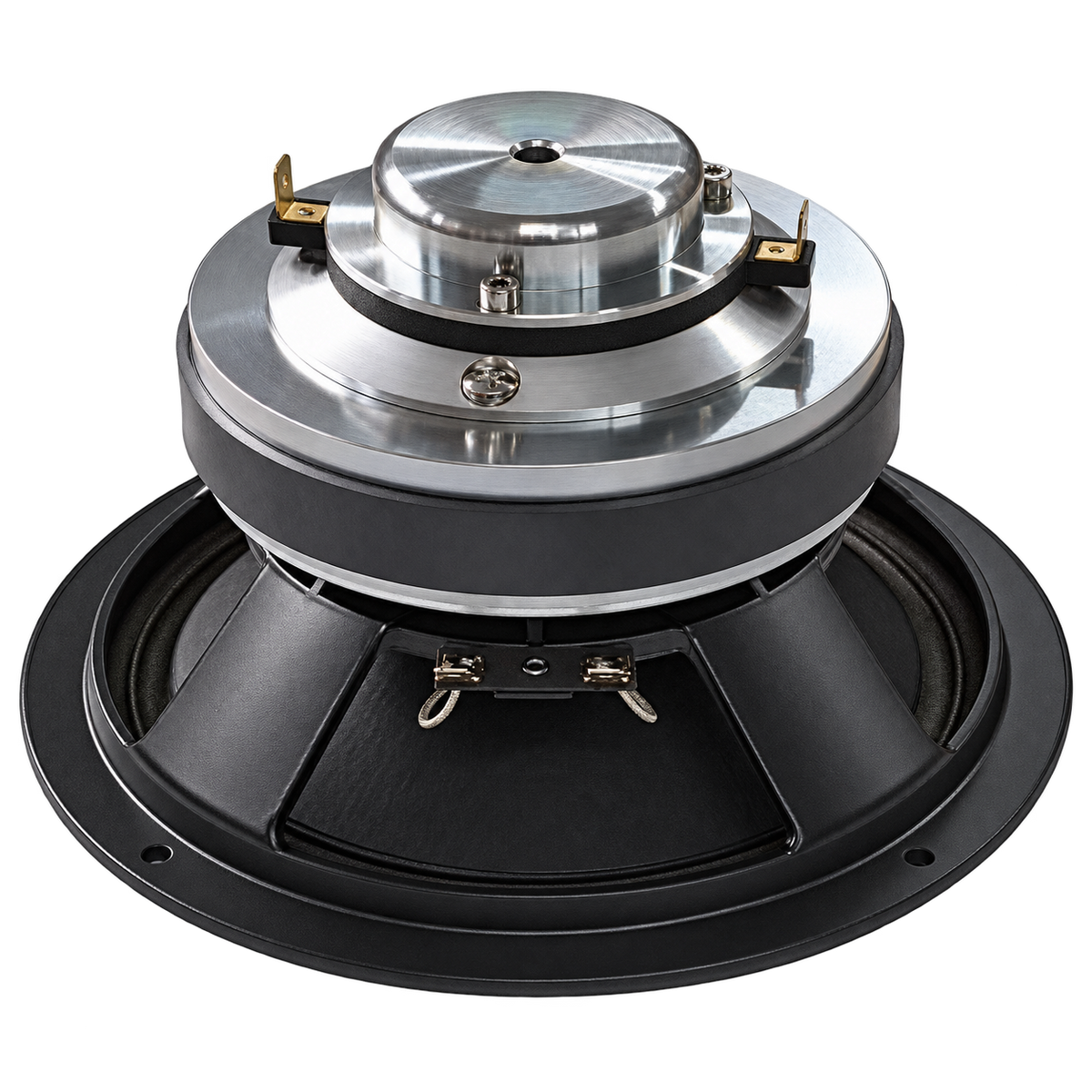
The Ciare CXI160 is a 6.5-inch PRO SPL coaxial speaker designed for high-output applications, combining a robust midrange driver with a Mylar diaphragm high-frequency section for clear, efficient performance in demanding sound systems.
-
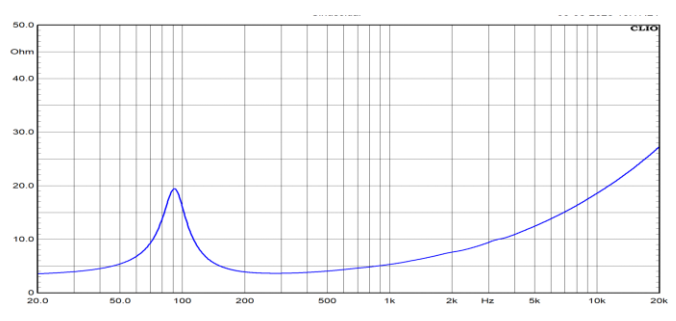
Separate 4-ohm impedance mid and 8-ohm HF voice coils for balanced output
-
High power handling: 450 W (LF) / 250 W (HF) continuous
-
Built for custom mobile applications, including competition use, requiring clarity and durability
 2 Year Limited Warranty
 FREE Shipping
 Made in Italy
Couldn't load pickup availability
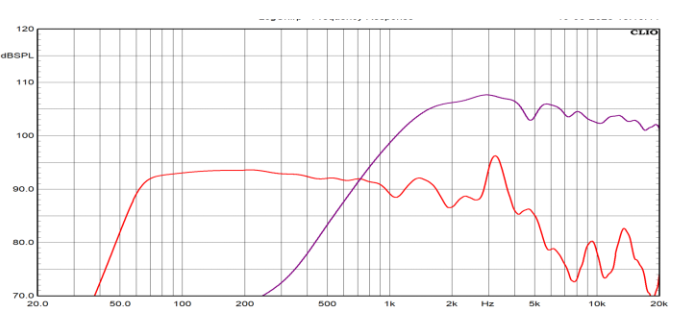
Frequency Response & Impedance
After spending serious time with the Ciare CXI160 6.5” Coaxial speakers, I can honestly say these are some of the most impressive PRO SPL coaxials I’ve experienced. The level of clarity, output, and overall musical performance is outstanding.
What immediately stood out was the incredible vocal presence and detail. The compression-style high frequency section delivers crisp, clean highs that stay controlled even at very high volume levels, while the 6.5” midbass provides excellent punch and attack with surprising authority for its size. Vocals sound extremely natural and forward, instruments are detailed and lively, and the overall sound reproduction feels very refined and professional.
One of the strongest qualities of the CXI160 is efficiency. These speakers get loud effortlessly while maintaining composure and sound quality. Even outdoors and at long distance, the projection is exceptional. In motorcycle audio and high-output applications, that type of performance makes a huge difference. The speakers cut through wind and road noise with ease while still sounding musical instead of harsh.
Build quality is equally impressive. Everything about the speaker feels premium and purpose-built for serious performance. From the heavy-duty motor structure to the overall construction quality, it’s obvious that Ciare engineered these speakers for demanding real-world SPL environments and long-term durability.
The balance between sound quality and output is what truly separates the CXI160 from many other speakers in this category. They deliver the loudness needed for competition and outdoor audio setups while still maintaining the detail and realism that audiophiles appreciate.
For anyone looking for a true high-performance 6.5” coaxial capable of delivering extreme output, outstanding vocal clarity, strong midbass impact, and professional-level sound quality, the Ciare CXI160 is absolutely worth it. Ciare did an incredible job with this speaker, and it exceeded my expectations in every way.
The CXI160 is rated around 94 dB sensitivity on the LF section with a 105 dB HF section and handles serious power for a 6.5-inch coaxial, which is a big reason why it projects so aggressively in motorcycle and PRO SPL setups.

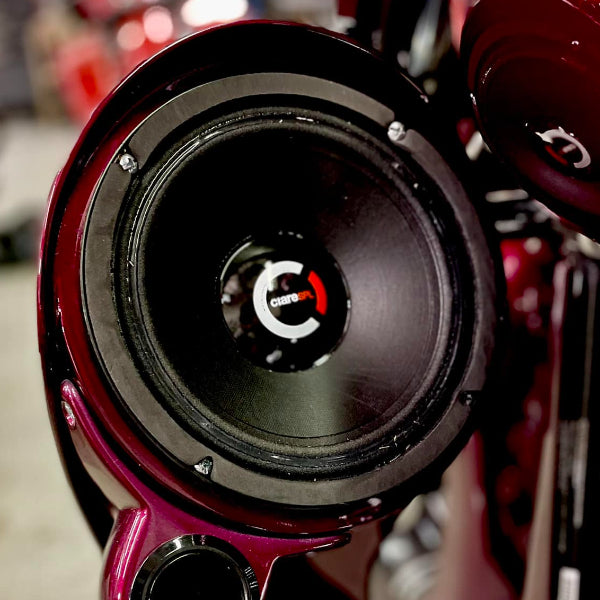
I was told these wouldn't fit in a roadglide pod on 25 roadglide.Well I had to see fit myself.These speakers are terrific.Its a tight fit but you can get them to fit.Will get pics of them and video of them playing.
FAQ for Speakers
Some common questions about CiareUSA speakers. Also checkout our library of FAQ's for more or ask us a question here.
Power Rating
The power rating of a speaker is typically listed in two ways:
Nominal or Continuous power rating: The amount of pure power that can be applied to a speaker continuously with a constant signal. Some manufacturers use a pure tone or industry accepted signal (such as a modified version of pink noise) and apply it for a given period of time (typically 2 to 8 hours or more).
Music/Program power rating: Music typically does not have constant tones, there are many instances within a song where the signal is low and amplifier power drops to near 0 watts, which allows for a speaker’s voice coil to cool. Because of this, a speaker is able to accept twice the amount of power from an amplifier, provided the amplifier is not sending a clipped signal (which is momentary DC voltage) to the speaker.
For tweeters and high frequency compression drivers, the power handling rating assumes that an appropriate high-pass filter (passive or active) is used.
Speaker Impedance
A speaker’s impedance is traditionally considered the lowest AC resistance in a speaker’s bandwidth, which is between resonant frequency (also referred to as Fs) and the highest frequency the speaker can reproduce.
When testing a speaker’s resistance with a multimeter, DC resistance (also referred to as Re) is being measured. It is very common to measure resistance up to 50% lower than a speaker’s rated impedance.
For example, many 8-ohm speakers will measure 6 ohms with a multi-meter or DMM.
Resonance/Resonant Frequency
A speaker’s resonant frequency is the frequency at which the weight of the moving parts of the speaker becomes balanced with the force of the speaker suspension when in motion.
With a speaker, the mass of the moving parts, and the stiffness of the suspension (surround and spider) are the key elements that affect the resonant frequency.
As a general rule of thumb, a lower resonant frequency indicates a woofer that would be better for low-frequency reproduction than a speaker with a higher Fs. This is not always the case though, because other parameters affect the ultimate performance as well.
Usable Frequency Range
A speaker’s usable frequency range is defined differently for each type of speaker but generally follows the rule of thumb where the lowest frequency is the resonant frequency, and the highest frequency is where the speaker’s output begins to decrease.
Woofers will typically play lower than the listed lowest frequency but is dependent on the enclosure type (sealed versus ported/vented versus bandpass), size, and tuning.
High frequency speakers, such as tweeters and compression drivers, have a slightly different usable frequency range that typically starts at one octave (or twice the frequency) above resonant frequency. It is a good rule-of-thumb to use a 12 dB/octave (or steeper, such as 18 dB/octave) high-pass filter set to double or triple the resonant frequency.
Sensitivity
A speaker’s sensitivity represents one of the most useful specifications published. It is a representation of the efficiency and loudness (SPL, which is sound pressure level) you can expect from a device relative to the input power.
Sensitivity is expressed as the average output across the usable frequency when applying 1W/1M into the nominal impedance, 2.83V for 8 ohms, 2V for 4 ohms.
As most amplifiers are voltage-source devices, increasing the gain increases the voltage. Once gain is set at a particular level, it is common to notice that a 4-ohm speaker is a little louder (around 3 dB) on a given amplifier than an 8-ohm speaker connected to the same amplifier. This is due to the 4-ohm speaker drawing twice the amount of current from the amplifier than the 8-ohm speaker.